

Flexible Probes for Oral Gavage | FTP Guide and Choice
Flexible oral gavage probes in rodents: guide to selection and use
Flexible oral gavage probes (FTP: plastic feeding tubes) are now an increasingly popular solution for oral administration of compounds in mice and rats. Compared with traditional rigid stainless steel probes, they offer several advantages in terms of safety, ease of use and animal welfare.
In this guide we look at what they are, how to choose the correct size, and some best practices for use in rodent oral dosing.
What are FTPs
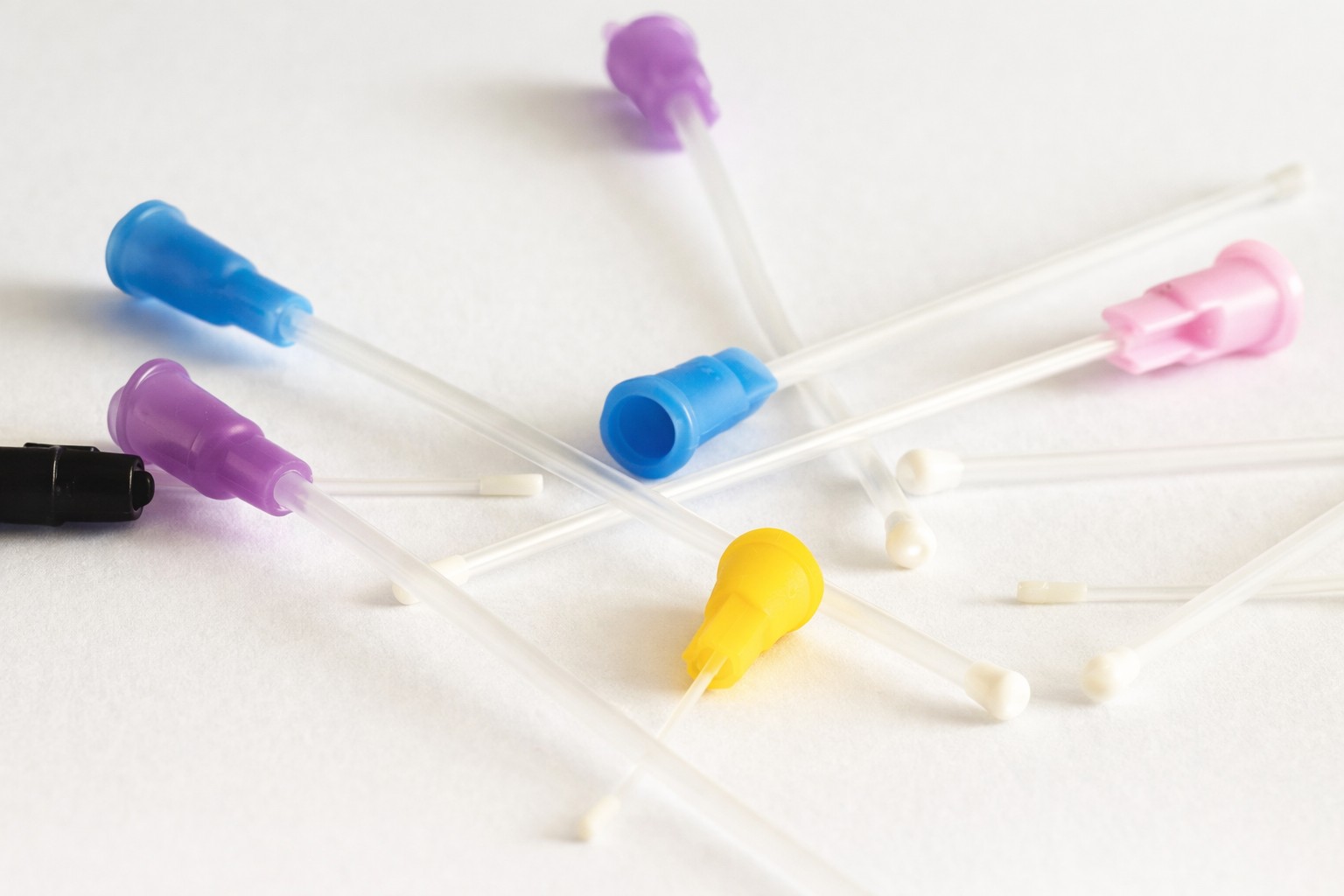
The FTPs(plastic feeding tubes) are probes made of medical polypropylene, the same material used for many disposable syringes.
They consist of:
-
A Luer lock or slip fit for connection to the syringe
-
A hose available in different lengths and diameters
-
A soft rounded tip designed to reduce the risk of injury.
Unlike traditional metal probes, these probes are disposable, so they do not require washing or autoclaving.
Why use plastic probes instead of steel probes
More and more laboratories are switching from metal probes to flexible gavage probes, mainly for three reasons:
Increased safety for the animal
The soft tip reduces the risk of accidental insertion into the trachea during the procedure.
Lower risk of contamination
Being disposable, they eliminate the need for cleaning and sterilization.
Improved operational management
They simplify daily work in laboratories and reduce the risk of contamination between samples.
Recent studies also indicate that the use of flexible probes represents an improvement in animal welfare practices (refinement) in oral gavage procedures.
How to choose the correct probe size
The choice of probe depends mainly on:
-
weight of the animal
-
viscosity of the solution to be administered
-
length of the esophagus.
There is no such thing as a universal size: it is often useful to test multiple options to find the one best suited to your application.
Probe length
The ideal length is approximately the distance between the animal’s mouth and sternum.
Using the correct length helps reduce the risk of:
-
liquid aspiration
-
perforation of the esophagus.
Gauge (diameter)
The probe gauge should be chosen according to:
-
size of rodent
-
viscosity of the compound.
More viscous solutions generally require larger diameters.
Most commonly used dimensions
Below are some general directions used in the workshops.
Mice
-
< 20 g: FTP-22-25
-
20-30 g: FTP-20-30 / FTP-20-34
-
> 30 g: FTP-20-38 (most common size)
For particularly viscous solutions, a polyurethane probe may be preferable.
Rats
-
< 100 g: FTP-18-30 / FTP-22-38
-
100-200 g: FTP-18-38 / FTP-18-50
-
200-300 g: FTP-18-75 or polyurethane models
-
> 300 g: FTP-15-78 / FTP-15-100
HERE the complete brochure.
Immobilization of the animal (scruff)
Proper immobilization is essential to safely perform oral gavage in mice and rats.
Before the procedure, it is advisable to accustom the animals to handling in order to reduce stress.
Mice
The rat is grasped gently at the base of the tail and then clamped by the neck skin (scruff) between thumb and forefinger, keeping it upright.
Rats
The rat is grabbed by the skin of the neck and lifted while keeping the body upright, preventing it from prying with its hind legs.
Oral gavage technique
After immobilizing the animal:
-
Insert the probe slightly to the right or left of the midline of the mouth
-
advance the probe without forcing
-
administer the contents of the syringe
-
Remove the probe and monitor the animal.
There should be no resistance during insertion. If resistance appears or liquid is observed coming out of the nose, stop the procedure immediately.
Mouse Oral Gavage Training VIDEO.
Rat Oral Gavage Training VIDEO.
Write to us for more information.